Tashkent Metro Guide: How to Ride It Without Losing Time
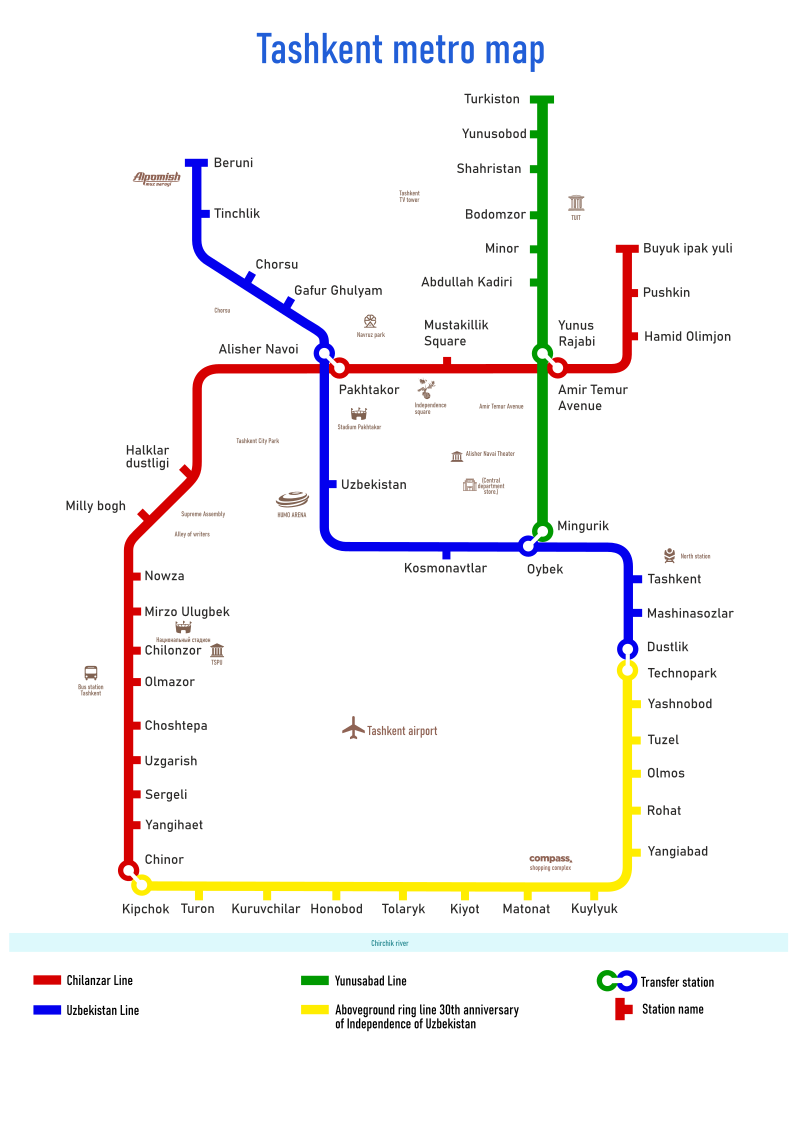
The Tashkent Metro is usually the fastest way to cross central Tashkent without getting stuck in road traffic. For both city residents and first-time travelers, the best result comes from one simple habit: decide your start station, destination station, and transfer point before you go underground.
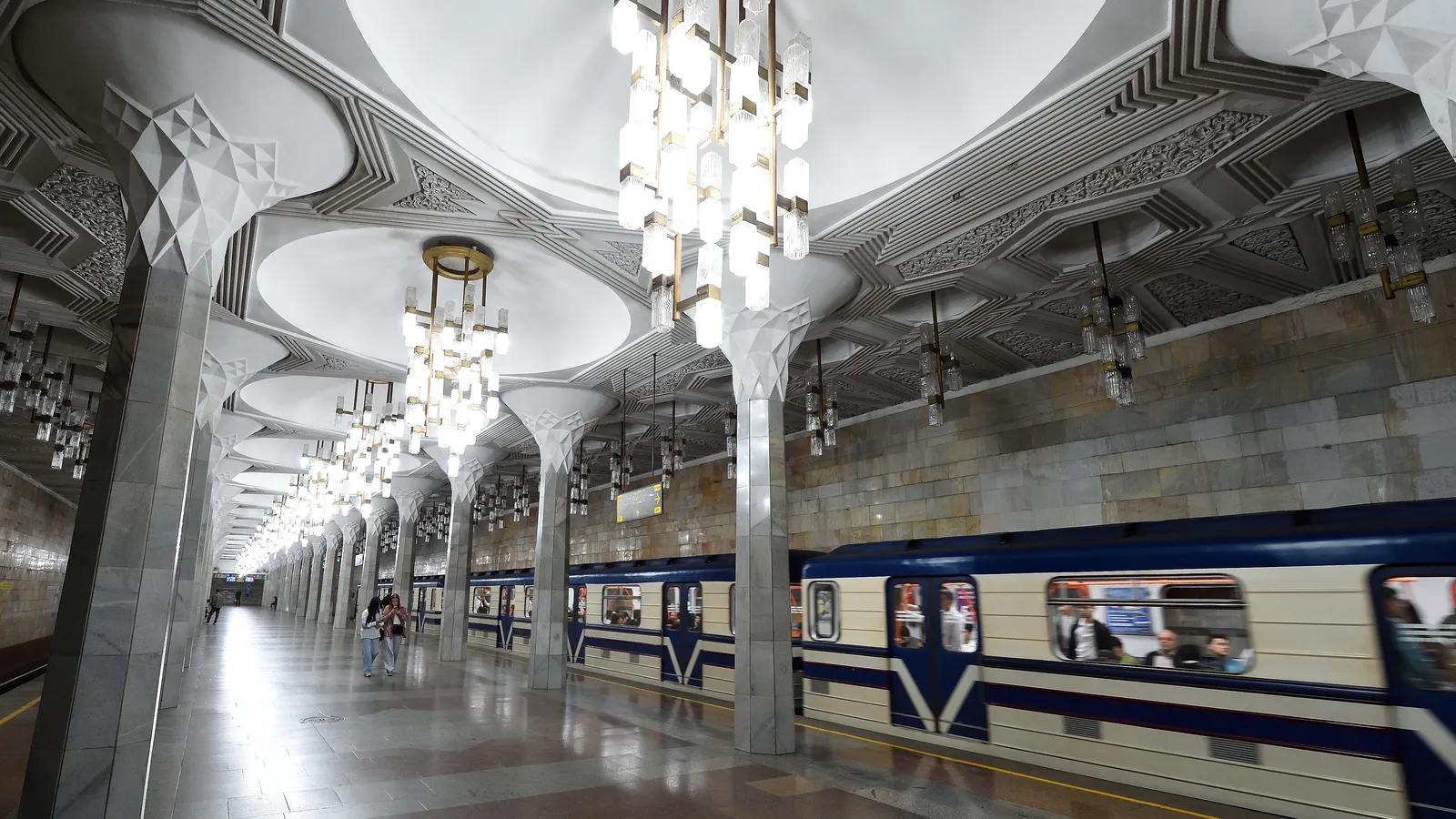
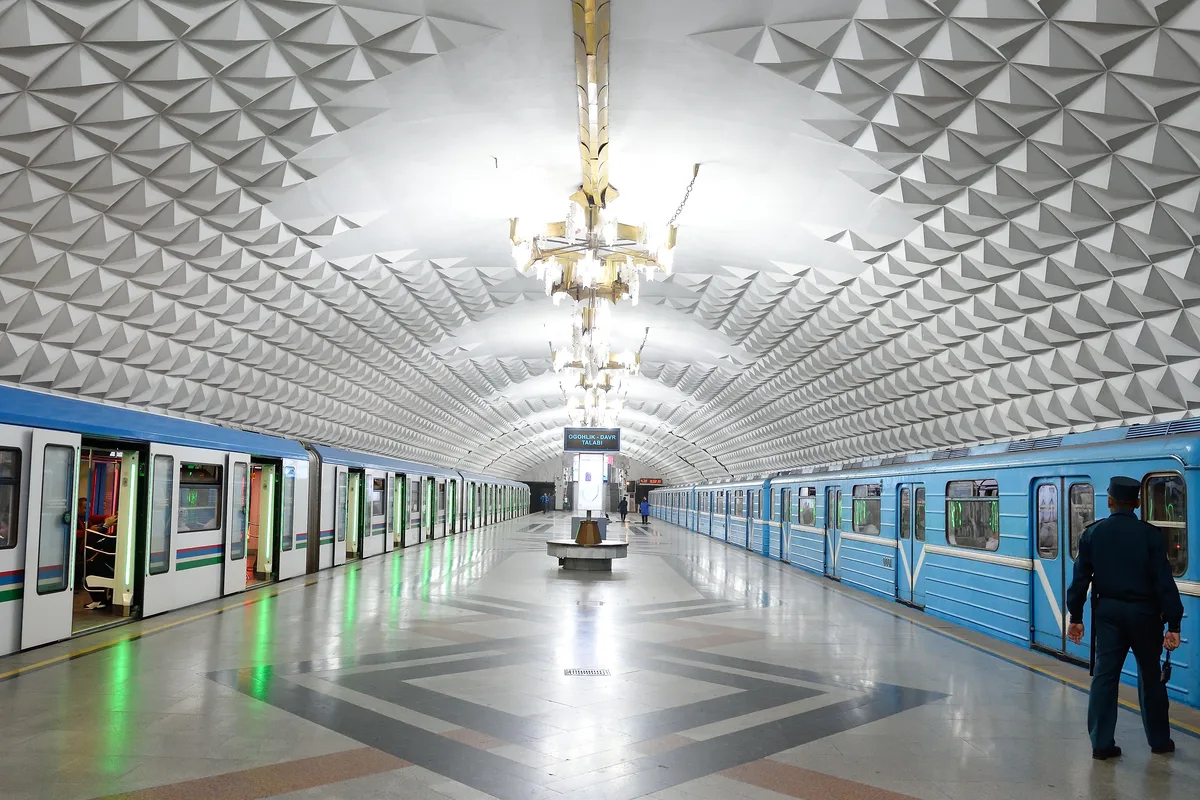
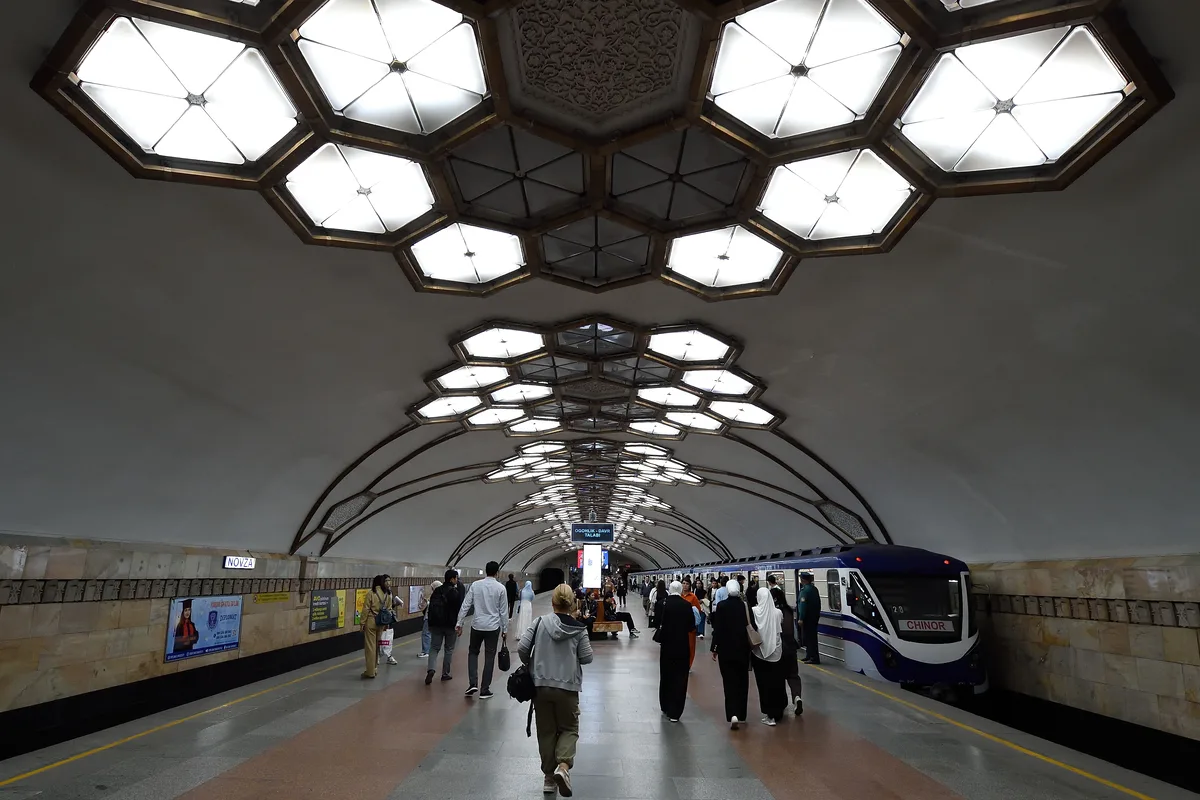
If your focus is station architecture and photo-oriented exploration, use the dedicated walk page: Tashkent Metro architecture walk.
How to use the Tashkent Metro on your first ride
For a first ride, keep the plan simple:
- Open the official metro map and note your start, destination, and transfer station.
- Decide whether you need a one-time QR ticket or a repeat-ride payment method.
- Keep one backup payment option ready before you reach the gate.
- Use metro for the long central leg, then switch to taxi for the last stretch if your hotel is far from an entrance.
Choose metro for the long leg, taxi for the first or last leg
Use metro when you need a predictable cross-city move between central districts. Use taxi when you are carrying luggage, arriving from the airport, returning late, or finishing far from a station entrance.
This split works well on a normal city day:
- metro for museums, markets, and central district hops,
- taxi for luggage, hotel arrival, and late finishes,
- walking for short stretches between one station exit and the next stop on your route.
Set payment and ticket choice before you reach the turnstile
Keep payment setup simple and ready in advance. The official Tashkent Metro payment page lists three practical methods for entering the system:
- ATTO transport cards,
- one-time QR ticket (
QR-bilet), - Humo/UZCARD bank card or mobile payment systems.
For one ride, use the QR ticket (QR-bilet). For repeat rides during the day, ATTO is usually the more practical choice. Local bank-card and mobile payment options also work when they are already set up.
For metro gates, the ATTO card flow is straightforward:
- tap the card on the turnstile validator,
- wait for confirmation before moving forward,
- if a red indicator appears, payment did not pass,
- if a yellow indicator appears, it means less than six minutes passed since the previous validation.
Top-up planning is just as important as tapping:
- use the ATTO app when you want to reload before leaving your hotel or home,
- use listed payment apps/bank channels from the ATTO passenger page when needed,
- use self-service terminals when mobile top-up is inconvenient.
For fare-plan users, open the Tashkent tab in official ATTO fare plans before loading a multi-day or longer pass.
Plan in station names, not district names
Route planning gets easier when you write down station names instead of keeping a rough direction in memory.
Use this quick sequence:
- Save your start station and destination station in notes or maps.
- Check whether you need a transfer before entering.
- If the route looks messy, split it into two decisions: first reach the transfer station, then continue.
- If the final address is still far from the station exit, plan the taxi leg in advance instead of improvising outside.
For most riders, this is enough for a smooth first ride. You do not need to memorize the full network.
Official Tashkent Metro map and payment pages
Use the official Tashkent Metro map to confirm line names and transfer logic before your ride. For payment rules, use the official Tashkent Metro site together with the ATTO passenger pages.
Trips where metro saves the most time
The metro is strongest when:
- you move between central sightseeing blocks,
- road traffic is slowing down surface travel,
- you want a predictable cross-city transfer in daytime.
It is weaker when:
- you land with luggage,
- your destination is in a station-poor outer zone,
- you are returning late and want a direct door-to-door ride.
On-station etiquette and comfort
- Follow platform markings and queue flow.
- Let passengers exit first before boarding.
- Keep luggage compact during peak periods.
- Give priority seating to elderly passengers, disabled passengers, and families with children.
- Follow current station signs and staff instructions for filming or photography.
Practical comfort and accessibility
- Accessibility conditions can vary by station.
- For step-free routing, ask at station information points before committing to a transfer.
- Keep one backup payment method to avoid gate delays.
Quick pre-ride checklist
- Chosen payment method ready (ATTO card, QR ticket flow, or supported bank-card/mobile flow).
- Start and destination stations saved offline.
- Transfer station noted in advance.
- Station rules checked on arrival.
Sources
- Tashkent Metro: Types of payment
- ATTO Passengers: Transport Card
- ATTO Passengers: Balance Replenishment
- ATTO Passengers: Fare Plans
- Tashkent Metro: official subway map
Related Links
- Tashkent city guide
- Tashkent airport transfer and city transport guide
- Tashkent metro architecture walk
- Tashkent attractions
- Tashkent restaurants guide
- Tashkent events
- First-time Uzbekistan travel tips
- Buy a SIM card in Uzbekistan
- Money and payment tips
FAQ
Is photography allowed in the Tashkent Metro?
Many riders ask this because rules changed over time. In current practice, casual photography is generally treated as allowed, but station-level rules can vary. Check posted signs and follow staff instructions immediately when requested.
Can I rely on cash-only metro tokens?
Do not plan around legacy token assumptions. Use current official payment channels and confirm options at station points.
How do Tashkent Metro tickets work for one ride?
For a single ride, use the official QR ticket (QR-bilet) flow listed by Tashkent Metro. If you expect repeated rides in the same day, ATTO or a supported bank-card/mobile payment method is usually easier than buying each ride separately.
Where can I find the official Tashkent Metro map?
Use the official Tashkent Metro map. It shows the current lines, station names, and transfer logic in one place.
What is the safest way to avoid payment issues at the gate?
Use one prepared primary method and one backup. A practical pair is ATTO card as primary plus a supported bank-card/mobile or QR option as backup.
Are station rules always the same?
Operational and access rules can change by station or by day. Follow local signs and staff instructions in real time.